Table of Contents
ToggleIntroduction to Page Size Checker SpellMistake and Its SEO Importance
The concept of a page size checker spellmistake has become increasingly relevant in the world of SEO and website optimization. Many users search for this term when they are trying to understand how large their web pages are and how page size affects loading speed and search engine rankings. Even though the phrase includes a spelling variation, the intent behind it is clear, which is to find tools or information related to checking webpage size and improving performance.
In modern digital marketing, page size checker spellmistake website speed plays a major role in user experience and search engine visibility. A page size checker helps website owners analyze the total weight of a webpage, including all its resources such as images, scripts, stylesheets, and multimedia elements. When combined with SEO strategies, this tool becomes essential for maintaining a fast and efficient website that performs well in search results.
Understanding page size is not just about numbers; it is about performance, accessibility, and user satisfaction. A well-optimized page ensures that visitors can access content quickly without delays, which improves engagement and reduces bounce rates. This is why the topic of page size checker spellmistake is more important than it may initially appear.
Understanding the Meaning Behind Page Size Checker SpellMistake Keyword
The keyword page size checker spellmistake is a combination of a functional SEO term and a common typing error. Many users unintentionally misspell “spell mistake” or “page size checker” while searching online, but search engines are advanced enough to understand the intended meaning. This makes such keywords valuable for SEO optimization and content targeting.
In SEO terminology, these types of queries are known as misspelled or variant keywords. They are frequently used by real users who are either typing quickly or unfamiliar with the correct spelling. Instead of ignoring these variations, SEO professionals often incorporate them naturally into content to capture additional search traffic.
The existence of such keyword variations highlights how user behavior influences search engine optimization strategies. Even a small spelling variation can lead to a significant number of searches, especially when the topic involves technical tools like page size checkers. Therefore, understanding and optimizing for these variations can help websites reach a broader audience.
How Page Size Checker Tools Analyze Website Performance
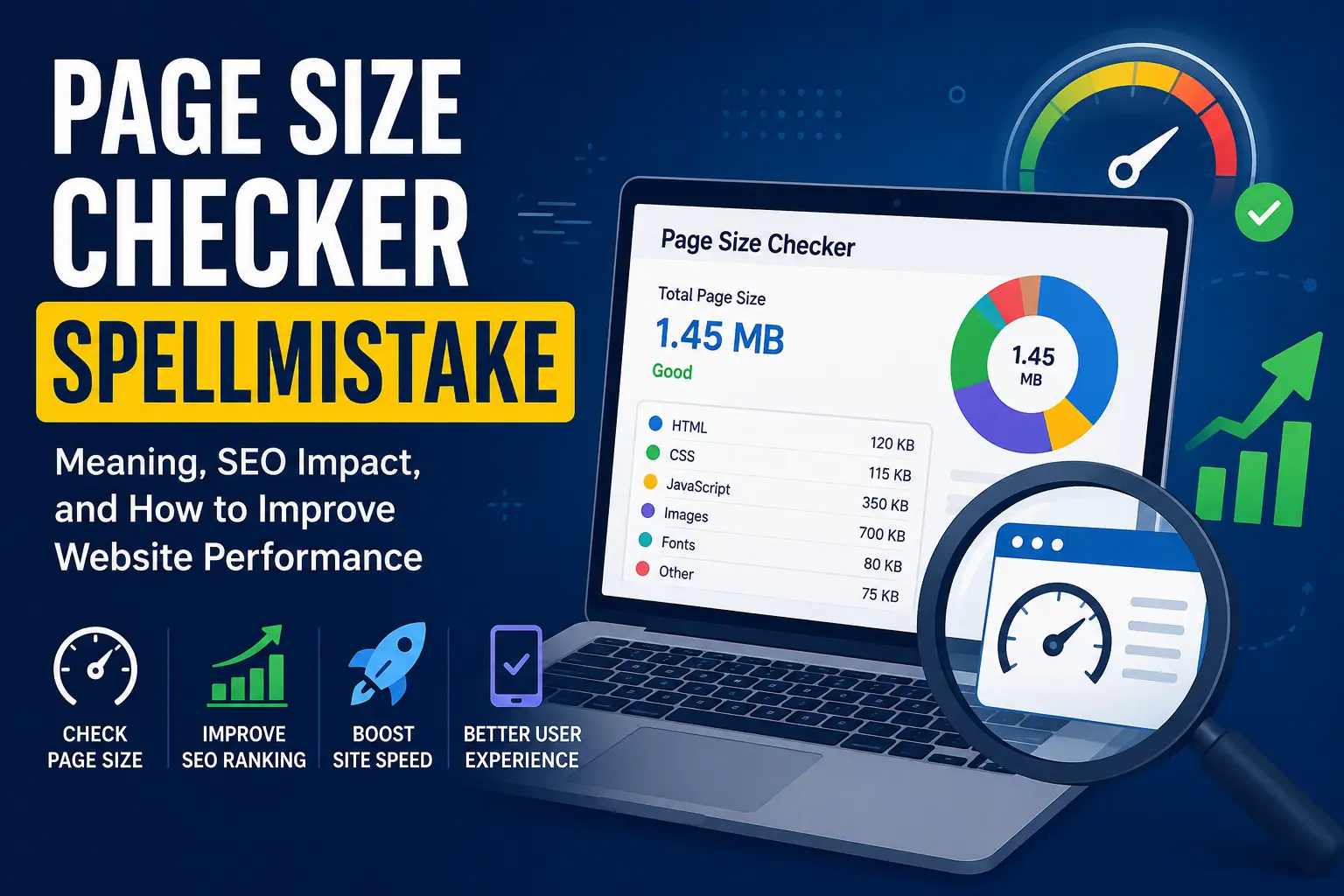
A page size checker tool works by simulating how a browser loads a webpage and calculating the total size of all the resources required to display it. This includes HTML structure, CSS styling, JavaScript functionality, images, videos, and external scripts. The final result is usually displayed in kilobytes or megabytes, giving website owners a clear understanding of their page weight.
When a URL is entered into the tool, it sends a request to the server and retrieves all associated files. The tool then aggregates this data and breaks it down into categories, allowing users to see which elements contribute most to the overall size. This process helps identify performance bottlenecks that may not be visible during normal browsing.
These tools are especially useful for developers and SEO experts who want to ensure that their websites meet performance standards. By analyzing page size, they can make informed decisions about optimization, such as compressing images or reducing unnecessary scripts. This leads to faster loading times and better overall user experience.
The Relationship Between Page Size and SEO Rankings
Page size plays a direct role in SEO performance because it affects website speed, which is a confirmed ranking factor for search engines like Google. When a webpage is too large, it takes longer to load, which can negatively impact its position in search results. Search engines prioritize fast-loading pages because they provide better user experiences.
A large page size can also affect crawl efficiency. Search engine bots have limited time and resources when scanning websites, and heavy pages may slow down the indexing process. This means that important content might not be indexed as quickly or effectively as it should be, potentially reducing visibility.
Additionally, page size influences user behavior metrics such as bounce rate and session duration. If a page loads slowly, users are more likely to leave before interacting with the content. This sends negative signals to search engines, further affecting rankings. Therefore, optimizing page size is essential for maintaining strong SEO performance.

Common Factors That Increase Webpage Size
Several elements contribute to increasing webpage size, and understanding them is crucial for effective optimization. One of the most common factors is uncompressed images. High-quality images are important for visual appeal, but when they are not optimized, they can significantly slow down a website.
Another major contributor is excessive use of JavaScript and CSS files. Modern websites often rely on multiple scripts to provide interactive features, but when these files are too large or poorly optimized, they increase overall page weight. This can have a negative impact on loading speed, especially on mobile devices.
Third-party integrations such as embedded videos, tracking scripts, and external widgets also add to page size. While these features enhance functionality, they must be carefully managed to avoid unnecessary performance issues. A balance between functionality and optimization is essential for maintaining a lightweight and fast-loading website.
Importance of Page Size Optimization for User Experience
User experience is directly influenced by page size because it determines how quickly visitors can access content. A smaller, optimized page loads faster and provides a smoother browsing experience. This increases user satisfaction and encourages visitors to stay longer on the website.
Slow-loading pages often lead to frustration, especially for mobile users who may have limited internet speed. In such cases, even a few extra seconds of loading time can result in lost traffic. This makes page size optimization a critical part of web development and SEO strategy.
A well-optimized page not only improves speed but also enhances accessibility. Users with slower devices or weaker internet connections can still access content without difficulty. This inclusivity is an important aspect of modern web design and contributes to overall website success.
How Page Size Checker SpellMistake Helps Web Developers
The page size checker spellmistake concept is useful for web developers because it highlights how users search for tools even when they make spelling errors. By understanding these search patterns, developers and SEO professionals can optimize their content to match real-world queries.
These tools help developers identify technical issues that may not be obvious during development. For example, a website might look visually perfect but still have a large underlying page size due to unoptimized assets. A page size checker reveals these hidden problems and provides actionable insights.
By regularly using page size analysis tools, developers can maintain clean, efficient, and high-performing websites. This proactive approach ensures that websites remain competitive in search rankings and provide consistent user experiences across all devices.
Techniques to Reduce Page Size for Better Performance
Reducing page size involves optimizing various elements of a website to make it lighter and faster. One of the most effective techniques is image optimization, which includes compressing images without losing quality. This alone can significantly reduce overall page weight.
Another important method is reducing and minifying code files. When unnecessary characters, spaces, and comments are removed from CSS and JavaScript files, their size decreases, resulting in faster loading times. This optimization also improves browser efficiency when rendering pages.
Caching and content delivery networks also play a major role in reducing page size impact. By storing copies of website content in different locations around the world, these technologies ensure that users receive data from the nearest server, which improves speed and reduces load time.
Conclusion on Page Size Checker SpellMistake and SEO Value
The topic of page size checker spellmistake highlights the importance of understanding both technical SEO and user search behavior. Even though the keyword includes a spelling variation, it represents a real and valuable search intent focused on improving website performance and speed.
Page size is a critical factor in modern SEO because it directly affects loading speed, user experience, and search engine rankings. By using page size checker tools, website owners can identify performance issues and take necessary steps to optimize their pages effectively.
In the long run, maintaining a lightweight and optimized website ensures better visibility, improved user engagement, and stronger overall performance. This makes page size optimization not just a technical task but an essential part of successful digital strategy.